

“Here’s a toast to the host of those
Who love the vastness of the sky”
-lyrics from “The Air Force Song, Wild Blue Yonder”
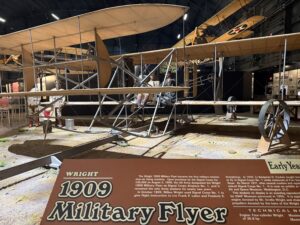
When entering the vast collection of aircraft and exhibits at Ohio’s National Museum of the Air Force, visitors are part of a celebration of flight spread through four buildings and 20 acres of indoor exhibit space. The museum at Dayton guides visitors on a journey from the pioneering flights of Ohio’s Wright Brothers to the advancements of modern space exploration. The size and scope of the museum is remarkable.
“We want people to be curious, no matter what their age or what their experience,” said Douglas Lantry, Curator and Historian at the museum’s research division. “Some people have a lifelong connection with the military and the Air Force. And some people have no connection…but we want to serve all those people by telling an important story about the Air Force and how the military plugs into the wider frame of American history and American culture and technological history.”
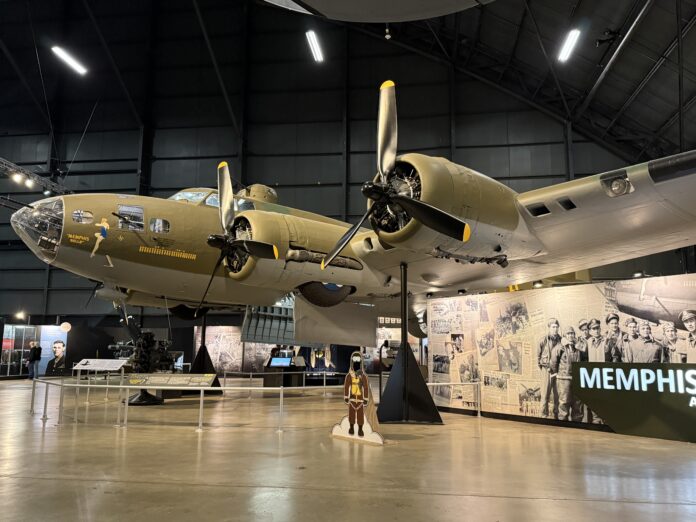
 The World War II gallery includes Bockscar, the B-29 that dropped the second atomic bomb on Japan, ending World War II. “It was an important artifact of a real pivot point in our national and world history, the beginning of the atomic age,” noted Lantry. Two Japanese fighters including a Zero attract attention nearby. During the attack on Pearl Harbor in 1941,pilot Phillip Rasmussen, wearing pajamas, took off in his P-36 to do battle. The pajamas are part of the museum’s exhibit. Volunteer Tony Rulli recalled, “A couple of years ago, his granddaughter came, and she started crying because those were grandpa’s PJ’s and he had told her all his stories of flying in World War II.” The restored Memphis Belle B-17 was placed in the museum in 2005. “In 1943, the survival rate was about 10% for B-17’s flying over Europe”, Rulli explained. “So, their survival of 25 missions is a great story.”
RELATED: Ohio’s Amish Country: a throwback to a gentler time
These warplanes are an important piece of history, but there is much more to the museum.
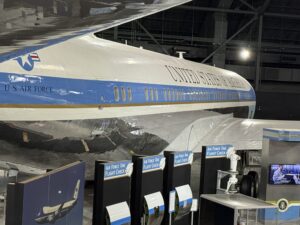
Guests can board ten presidential aircraft beginning with FDR’s “Sacred Cow” through Air Force One used by John F. Kennedy and Lydon Johnson. “You can stand in the places where really pivotal points in American history took place,” noted Lantry. “You will find yourself standing on the very spot where Lyndon Johnson was sworn in after John F. Kennedy was assassinated.” The Boeing jet known as SAM 26000 transported Kennedy’s body back to Washington from Dallas.
 Be prepared for emotional twists that might surprise you. Rulli encountered a woman, who had been a Rosie the Riveter, who “got up on an aircraft stand and hugged the engine cowling area because that’s what she worked on at the factory during World War II”. Another family spotted a German aircraft from pictures that was flown by their grandfather in World War I.
Younger guests are fascinated by the space gallery and high-tech machines including a Space Shuttle trainer. Lantry added that the missile gallery is unique. “It’s a tall, vertically oriented space, where it’s the only place in the world that you can see pretty much all of the U.S. strategic nuclear deterrent in the form of strategic missiles all in one place indoors.”
The National Museum of the U.S. Air Force is less than three hours from Toledo. Comfortable shoes are a requirement for an enjoyable visit. Plan to spend at least half a day although it’s possible to spend two days viewing the thousands of artifacts and 350 aircraft.
There is no charge for admission although donations are welcome. More information is available at nationalmuseum.af.mil.