

One in nine seniors age 65 and older live with Alzheimer’s Disease. Those numbers are projected to grow significantly as the population ages. “So, we are all at risk if we have
the privilege of living a long life,” says Pam Myers, Senior Director of Programs of the Northwest Ohio Alzheimer’s Association. But progress is being made on many fronts. The Association’s Northwest Ohio chapter covers 24 counties with a “small but mighty staff,” along with volunteers who deliver outreach, events, pro- grams and advocate for those affected by the disease.
“Our mission is to make sure that people have the best care and support on this Alzheimer’s journey. We also want to lead the way in research so that we can find a cure. And we want to be the best advocate for caregivers and people living with the disease.”
Early diagnosis, better understanding
Myers began her career as a nurse and uses her background in healthcare to emphasize the importance of early diagnosis when a person exhibits cognitive or memory issues.
The symptoms might also signal other issues. “You could be having strokes, mini-strokes, or an infection. You could have some issues with your gut. You could have a hormone imbalance. All those things…have a different course of treatment.”
A professional medical evaluation can distinguish between Alzheimer’s and other forms of dementia. “There is a treatment available specific for Alzheimer’s disease,” she adds. “What is really cool is the increase in availability of a blood test.” She calls it a game changer as it moves from clinical trials to mainstream availability.
A top priority for the Alzheimer’s Association is to help people better understand the disease. “We provide a lot of educational programs. We also do caregiver support groups. These are places where our caregivers can go to get a break, talk to other people on the journey to learn some strategies and tips.” Nearly all of the 24 counties covered by the local office include support groups. Services are provided free of charge and are funded largely by donations. The Walk to End Alzheimer’s each October is the organization’s largest annual fundraising event.
Many undiagnosed
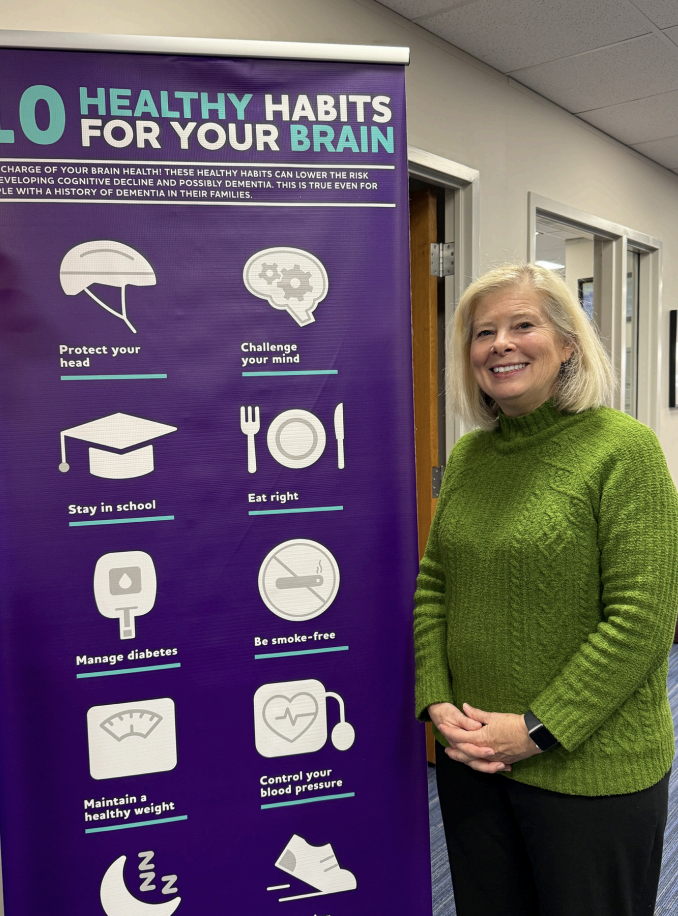
The Association estimates about half of those with Alzheimer’s Disease, (about seven million Americans) go undiagnosed. The financial burden reaches billions of dollars. So, reducing the risk is urgent. “The focus on brain health includes strategies involving “diet,
exercise, cognitive stimulation and making sure we’re on a structured pathway to achieve these goals.”
Research is underway to discover new treatments and medications.
“We have two medications that actually treat the underlying causes of Alzheimer’s disease. You have to catch it early. So again…early detection and early diagnosis. You can’t just blow it off anymore and say, you know, Dad’s getting older.” Dementia tends to run in families. Research is taking place to discover the genetic code that may lead to predicting if a person may develop the disease.
To find a doctor, register for a program, volunteer or ask a question, a trained specialist is available through the association’s 24/7 helpline at 800-272-3900 or go to Alz.Org/NWOH.